April 28, 2021
In the YouTube era, “video modeling” has become the easiest and most direct way to learn new skills. From training a puppy, learning to dance, pulling a transmission, or even performing surgery, just about every skill can be mastered through short, targeted videos.
Read More
April 28, 2021
In the age of YouTube, TikTok, and other Social Media platforms, video modeling is at our fingertips. I recently ordered a new office chair from a popular online website and had some difficulty deciphering the over complicated instructions of putting the chair together. A quick Google search later, I found a step-by-step video showing how to assemble the chair. I watched, re-watched, and assembled my new chair without difficulty.
Read More
April 15, 2021
Generalization is the ability to apply something learned to other situations. If you learned to tie your shoe, can you tie a bow with a ribbon? The goal is to see progress outside of the therapy setting, such as, at home, at school, or the park – and with other people, such as grandparents, the babysitter, or a teacher.
Read More
April 15, 2021
At Gemiini, we like to disguise the line between work and play – especially if your learner resists buckling down and working with the Language Pyramid Videos.
Read More
April 14, 2021
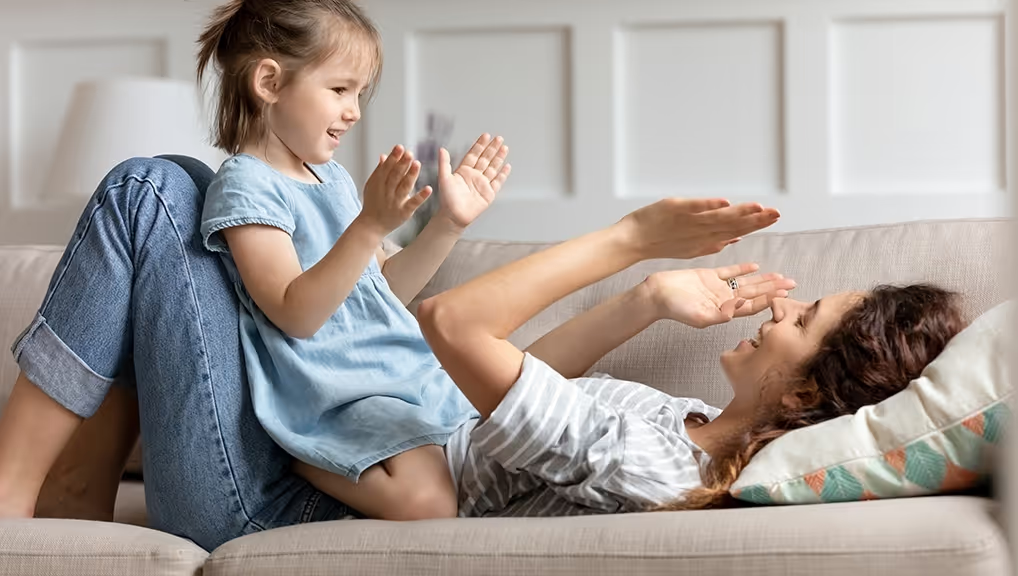
We learn by imitation all the time – at a yoga class, watching a cooking channel, taking dance lessons, or even getting styling tips from a hairdresser. Children begin to imitate at the earliest ages. A child might bang on a drum, push a toy car, clap hands, or wave bye-bye.
Read More
April 14, 2021
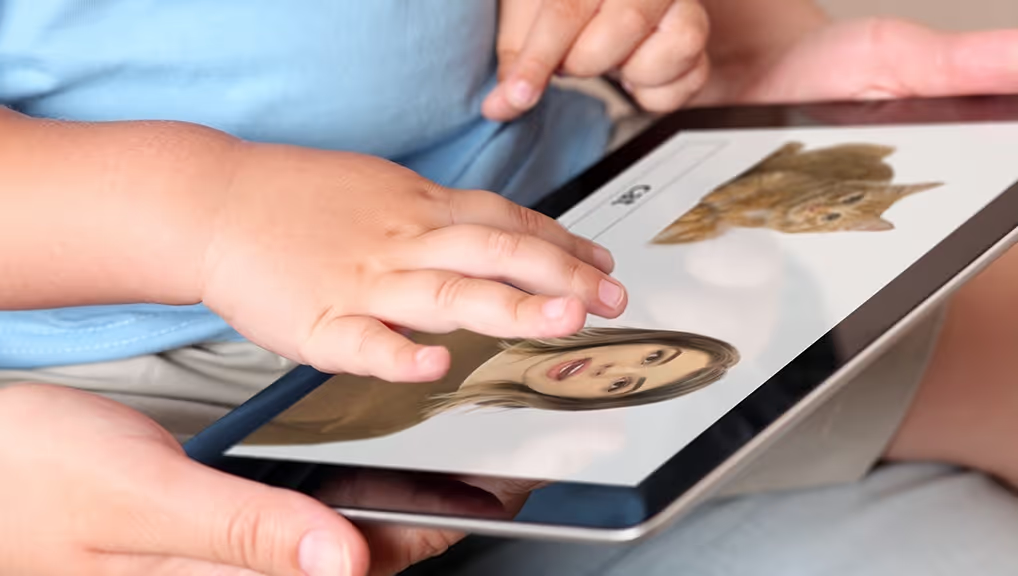
The Gemiini program is distinguished by Discrete Video Modeling, its unique learning approach. If you learn a dance step or a yoga posture from YouTube, that is also “video modeling,” but Discrete Video Modeling (DVM) is different. DVM uses isolation (cutting out the background), repetition, and generalization to communicate directly to the learning part of the brain.
Read More