Keeping Active Learning Without Adding Pressure
How to Turn School Breaks Into Skill Growth Instead of Skill Loss
During the school year, children are surrounded by support. They have teachers guiding them, therapists reinforcing skills, and a structure that keeps learning moving forward each day. Over time, those repeated exposures begin to build something meaningful. Words come more easily. Understanding improves. Skills that once felt out of reach begin to take hold.
Then a break comes, and everything changes.
The structure disappears. The repetition slows. The steady reinforcement that helped those skills grow is suddenly gone. What many families notice next is not just a pause in progress, but a gradual slipping of skills that had only recently begun to stick.
This isn’t because a child isn’t capable. It’s because learning, especially for children who rely on repetition and clear input, needs to stay active in order to hold.
Why Breaks Often Lead to Setbacks
When a child is learning a new skill, it is still fragile. It hasn’t yet become automatic. It needs to be seen, heard, and experienced multiple times before it truly becomes part of how they think and respond.
When that exposure stops, even briefly, the brain begins to let go of what it doesn’t use.
That’s why weekends, holidays, and especially summer can feel like a reset. Skills that were improving suddenly feel less consistent. Progress that took weeks or months can feel like it’s slipping away.
For many families, this creates a frustrating cycle. Progress is made during structured periods, only to be partially lost when that structure is removed. Then time and energy are spent rebuilding instead of advancing.
But this pattern is not inevitable.
The Opportunity Most Families Miss
Breaks from school don’t have to mean breaks from progress. In fact, they can become some of the most powerful times for growth.
Without the pressure of a full schedule, children often have more relaxed, receptive moments throughout the day. There is less rushing, fewer transitions, and more space for information to be absorbed without stress.
These are the exact conditions where learning can settle in more naturally.
The difference comes down to whether learning remains present in some form.
When it does, skills don’t just hold. They strengthen. They become easier to access. They begin to show up more consistently across different environments, not just in structured settings.
Instead of losing ground, children begin to build on it.
Bridging the Gap Between School, Therapy, and Home
One of the biggest challenges families face is that learning is often separated into different environments.
A child learns something in therapy. They practice something else at school. And then at home, there is often no clear way to carry those same skills forward in a consistent and supportive way.
Even when parents are deeply involved, it can be difficult to know how to reinforce what is being taught without turning home into another structured session.
That gap is where progress is often lost.
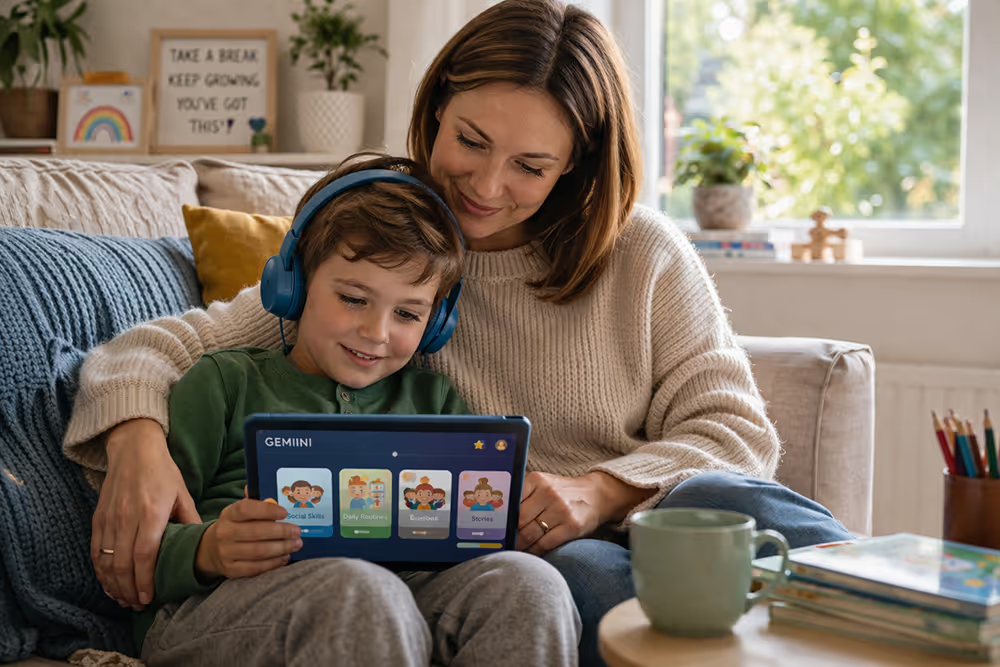
Gemiini changes that by acting as a bridge between all three environments.
It allows children to revisit and reinforce what they are already being taught, not in a new or overwhelming way, but in a format that is familiar, repeatable, and easy to engage with. Instead of skills staying isolated within a classroom or therapy session, they begin to carry over into everyday life.
That connection is what helps skills become more reliable, more accessible, and more integrated.
Keeping Learning Active Without Adding Pressure
The idea of continuing learning during breaks can feel overwhelming for parents. Most families are not looking to recreate school or therapy at home, and they shouldn’t have to.
What makes the difference is not intensity. It is presence.
Learning does not need to take over the day in order to be effective. It simply needs to remain part of it.
Gemiini makes that possible by removing the pressure to create a perfect environment or a perfectly structured schedule. It does not require long sessions or specialized knowledge. It allows learning to stay active in a way that feels manageable.
This is what makes it sustainable.
Using Everyday Moments to Maintain Momentum
One of the most overlooked opportunities for learning is the time that already exists within a family’s day.
Car rides, for example, are often filled with passive activities or simply passing time. Meals are moments when everyone is already sitting together. Transitions between activities often include periods of waiting or quiet.
These are not times that typically feel productive, but they can become meaningful without changing the rhythm of the day.
When learning is woven into these existing moments, it no longer competes with everything else that needs to get done. It becomes part of what is already happening.
This is especially valuable during breaks, when schedules are less predictable and traditional routines are harder to maintain.
When Routines Are Unpredictable
School breaks often come with unpredictability. Days don’t look the same. Sleep schedules shift. Plans change from one day to the next.
For many tools and approaches, this becomes a barrier. They depend on consistency in the structure of the day in order to work.
But learning does not have to depend on a rigid routine.
Gemiini allows learning to continue even when the day itself is changing. Whether a family is traveling, spending time outdoors, or simply moving through a less structured schedule, there are still opportunities to keep skills active.
This flexibility is what makes it possible to maintain forward movement, even when everything else feels less predictable.
What Happens When Learning Stays Active
When children continue to engage with learning during breaks, even in small, natural ways, something important begins to shift.
Skills become more stable. They are easier to access and require less effort to use. They begin to show up in more places, not just where they were originally taught.
Instead of feeling like something separate that only happens in certain environments, those skills start to become part of how a child communicates and interacts more broadly.
This is where progress becomes meaningful.
It is no longer about isolated gains. It is about integration.
Returning From Break Without Starting Over
One of the clearest differences families notice is what happens when a child returns to school after a break.
When learning has not been maintained, there is often a period of rebuilding. Skills need to be reintroduced. Confidence needs to be restored. Momentum needs to be regained.
When learning has remained present, even in simple ways, that rebuilding phase is often unnecessary.
Children return ready to continue.
They are not starting over. They are picking up where they left off, or even moving beyond it.
That shift saves time, reduces frustration, and allows progress to continue more smoothly.
The Role of Small, Consistent Input
It is easy to assume that meaningful progress requires large amounts of time or effort. In reality, it is often the smaller, repeated exposures that make the biggest difference.
When a child sees and experiences the same concepts regularly, those ideas become more familiar. Familiarity leads to understanding. Understanding leads to use.
This process does not require long sessions. It requires access.
Gemiini provides that access in a way that fits into everyday life, allowing learning to remain active without requiring significant changes to the day.
The Bottom Line
Breaks from school don’t have to come at the cost of progress. They can become a time where skills are strengthened, reinforced, and carried into everyday life.
The key is not to increase pressure or create a perfect routine. It is to keep learning present, even in small and natural ways.
Gemiini makes that possible by bridging the gap between school, therapy, and home, and by fitting into moments that already exist within a family’s day, whether structured or not.
When learning continues, progress doesn’t stall or slip backward.
It builds forward.