Eye Contact and Autism: Understanding What Is Really Happening
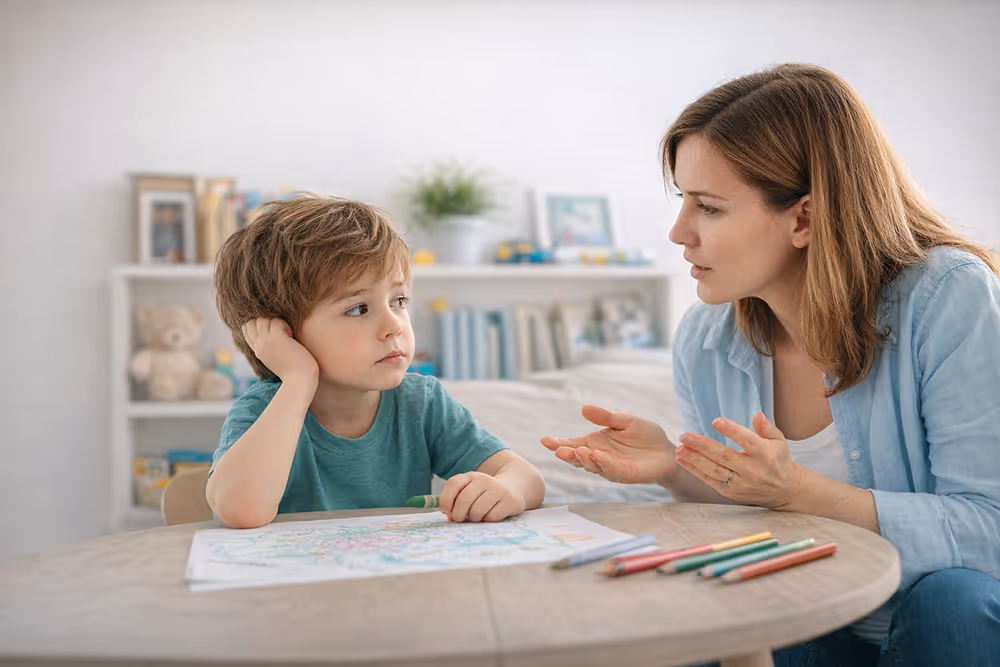
One of the first things many parents notice when they begin to suspect autism is that their child does not make much eye contact. Parents often describe it in emotional terms. They say their child looks everywhere except at them. Some say it feels as though they cannot quite reach their child. This can be very painful because eye contact is something we instinctively associate with connection and relationship.
However, for many children on the autism spectrum, avoiding eye contact is not a choice and it is not a sign that they do not care about the people around them. In many cases it is simply the brain trying to manage too much information at once.
The human face actually contains a tremendous amount of information. When two people are talking, there are constantly shifting expressions, moving eyes, changes in emotion, lip movements, and tone of voice. Most people process these signals automatically. For many children with autism, however, trying to interpret all of that information at the same time as they are processing spoken language can be overwhelming.
Because of this, some children understand speech better when they are not looking directly at someone’s face. Looking away can help them concentrate on the words being spoken. What may look like disengagement can actually be the child’s way of focusing more effectively.
For many years therapies often tried to teach eye contact directly. Parents and therapists were encouraged to prompt children with phrases such as “look at me” or “eyes on me.” The intention was good, but this approach sometimes created an unintended problem. The child could become so focused on performing eye contact correctly that they were no longer concentrating on the communication itself.
When eye contact becomes a task the child must perform, it can create pressure and anxiety. Instead of supporting communication, the interaction can begin to feel stressful. For this reason, many professionals now focus on building communication and engagement first and allowing eye contact to develop naturally.
Parents often notice something interesting when their child’s language and comprehension begin to improve. As communication becomes easier and more meaningful, the child often begins to look at people more frequently. This change is not usually the result of repeated prompts. It happens because the child begins to recognize that the people around them are an important source of information and connection.
In other words, eye contact often improves as communication improves.
One approach that many families have found helpful is video modeling. Programs such as Gemiini Systems use short, clear videos to teach language, social understanding, and communication skills. Many children on the autism spectrum are strong visual learners, and video modeling allows them to observe communication in a calm and predictable way.
Instead of being asked to perform eye contact in a stressful situation, children are able to watch faces, speech patterns, and expressions through video. They can replay the same lesson many times and absorb the information at their own pace. This allows them to become familiar with facial movements and language without the pressure of a live interaction.
Parents frequently report that something surprising happens after their children begin using Gemiini regularly. As their children become more comfortable understanding speech and communication through the videos, they begin to look at people more. Many families say they start to see more natural eye contact during conversations, play, and everyday activities.
These changes often appear gradually. At first a child may simply glance toward a parent’s face more often. Over time those glances can become longer moments of shared attention. Parents often describe the experience as a breakthrough because the eye contact feels natural rather than forced.
What makes this important is that the improvement in eye contact usually comes alongside other gains. Parents report that their children begin understanding more words, using more language, and showing greater interest in interacting with others. As communication becomes easier, the child becomes more engaged with the people around them.
The goal is not perfect eye contact. The real goal is connection. When children feel comfortable communicating and learning in a way that fits how their brains process information, engagement grows. Eye contact often becomes one of the natural outcomes of that progress.
For many parents, the moment when their child looks up and meets their eyes happens quietly and unexpectedly. But when it does, it often signals something much deeper. It reflects growing confidence, growing understanding, and a stronger connection between the child and the people who love them most.